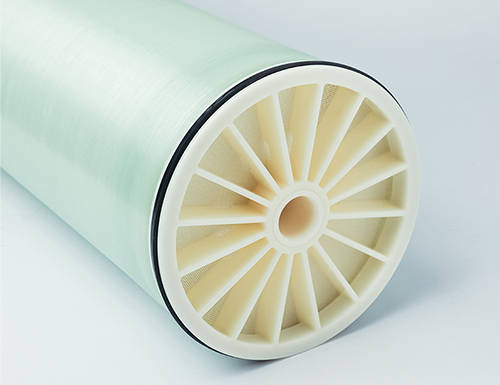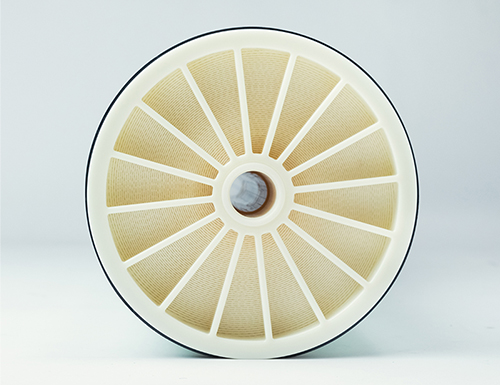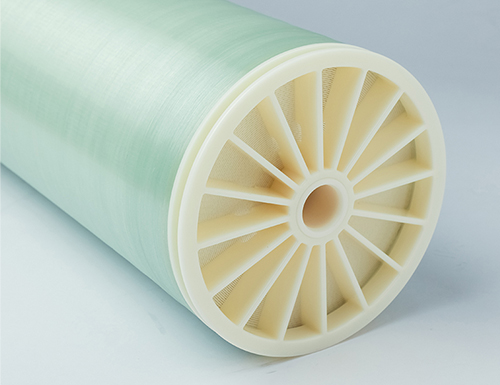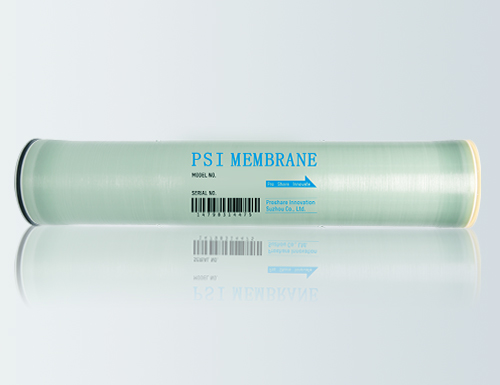
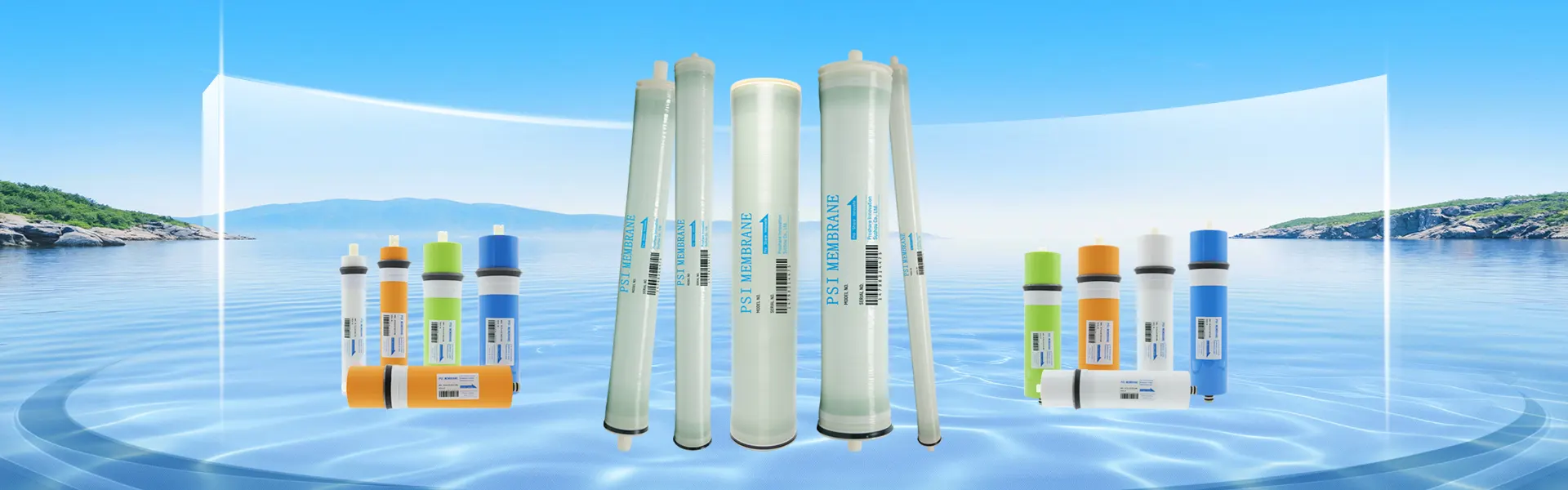
PSI MEMBRANE® Pro-LP Ultra-low Pressure Membrane is a third-generation Thin Film Nanocomposite (TFN) RO membrane element. It achieves high flux at ultra-low operating pressure and led to system investment and operating costs.
n Ultra-low operating pressure combined with high salt rejection rate;
n Stable chemical resistance to cleaning ensures long-term operational reliability;
n Excellent anti-fouling performance of TFN surface for long service life;
n TFN membrane flux is generally 30% higher than traditional TFC, with lower energy consumption.
| Product | Stabilized Salt Rejection(%) | Permeate Flow Rate GPD(m³/d) | Active Area Ft² (m²) | Feed Spacer Thickness (mil) |
| Pro-LP-4040 | 99.40 | 2800 (10.6) | 85 (7.9) | 34 |
| Pro-LP-8040 | 99.40 | 12000 (45.9) | 400 (37.2) | 34 |
|
1. Permeate flow rate and stabilized salt rejection were based on the following standard test conditions: 1500 ppm NaCl, 150 psi(1.03MPa), 77 ℉(25 ℃), 15% recovery; 2. Permeate flow rate varies by +/-15%. |
||||
| Maximum Operating Temperature | 45℃ |
| Maximum Operating Pressure | 600 psi(41 bar) |
| Maximum Pressure Drop | 1 bar |
| Continuous Operating pH Range | 2-11 |
| Cleaning pH Range | 1-13 |
| The largest water SDl15 | 5 |
| Maximum influent turbidity | 1 NTU |
| Maximum residual chlorine concentration of influent | <0.1 ppm |
PSI MEMBRANE® Pro-LPHR Ultra-low pressure high salt rejection membrane is a third-generation Thin Film Nanocomposite (TFN) RO membrane element.It enhances salt rejection performance while maintaining ultra-low operating pressure, thereby reducing system investment and operating costs.
n Ultra-low operating pressure combined with high salt rejection rate;
n Stable chemical resistance to cleaning ensures long-term operational reliability;
n Excellent anti-fouling performance of TFN surface for long service life;
n TFN membrane flux is generally 30% higher than traditional TFC, with lower energy consumption.
| Product | Stabilized Salt Rejection(%) | Permeate Flow Rate GPD(m³/d) | Active Area Ft² (m²) | Feed Spacer Thickness (mil) |
| Pro-LPHR-4040 | 99.55 | 2500 (9.5) | 85 (7.9) | 34 |
| Pro-LPHR-8040 | 99.55 | 10500 (39.7) | 400 (37.2) | 34 |
| Pro-LPHR-8040 | 99.65 | 12500 (47.3) | 440 (40.9) | 28 |
|
1. Permeate flow rate and stabilized salt rejection were based on the following standard test conditions: 1500 ppm NaCl, 150 psi(1.03MPa), 77 ℉(25 ℃), 15% recovery; 2. Permeate flow rate varies by +/-15%. |
||||
| Maximum Operating Temperature | 45℃ |
| Maximum Operating Pressure | 600 psi(41 bar) |
| Maximum Pressure Drop | 1 bar |
| Continuous Operating pH Range | 2-11 |
| Cleaning pH Range | 1-13 |
| The largest water SDl15 | 5 |
| Maximum influent turbidity | 1 NTU |
| Maximum residual chlorine concentration of influent | <0.1 ppm |
PSI MEMBRANE® Pro-LPFR Ultra-low pressure low-energy anti-fouling membrane is a third-generation Thin Film Nanocomposite (TFN) RO membrane element.It enhances salt rejection performance while maintaining ultra-low operating pressure, thereby reducing system investment and operating costs.
n Ultra-low operating pressure combined with high salt rejection rate;
n Stable chemical resistance to cleaning ensures long-term operational reliability;
n Excellent anti-fouling performance of TFN surface for long service life;
n TFN membrane flux is generally 30% higher than traditional TFC, with lower energy consumption.
| Product | Stabilized Salt Rejection(%) | Permeate Flow Rate GPD(m³/d) | Active Area Ft² (m²) | Feed Spacer Thickness (mil) |
| Pro-LPFR-4040 | 99.55 | 2500 (9.5) | 85 (7.9) | 34 |
| Pro-LPFR-8040 | 99.55 | 10500 (39.7) | 400 (37.2) | 34 |
|
1. Permeate flow rate and stabilized salt rejection were based on the following standard test conditions: 1500 ppm NaCl, 150 psi(1.03MPa), 77 ℉(25 ℃), 15% recovery; 2. Permeate flow rate varies by +/-15%. |
||||
| Maximum Operating Temperature | 45℃ |
| Maximum Operating Pressure | 600 psi(41 bar) |
| Maximum Pressure Drop | 1 bar |
| Continuous Operating pH Range | 2-11 |
| Cleaning pH Range | 1-13 |
| The largest water SDl15 | 5 |
| Maximum influent turbidity | 1 NTU |
| Maximum residual chlorine concentration of influent | <0.1 ppm |
PSI MEMBRANE® Pro-FR Thin Film Nanocomposite (TFN) anti-fouling brackish water RO membrane element adopts a proprietary composite membrane. The unique anti-fouling membrane technology endows it with excellent anti-fouling ability and cleanability, ensuring good salt rejection performance while reducing energy consumption and extending cleaning cycles.
n Reduces chemical cleaning frequency and chemical dosage while extending membrane service life;
n Lowers energy consumption, with energy savings of up to 30% at the same permeate flow;
n Widest pH tolerance range, significantly limiting the growth space of microorganisms.
| Product | Stabilized Salt Rejection(%) | Permeate Flow Rate GPD(m³/d) | Active Area Ft² (m²) | Feed Spacer Thickness (mil) |
| Pro-FR-4040 | 99.60 | 2400 (9.1) | 85 (7.9) | 34 |
| Pro-FR-8040 | 99.60 | 11000 (41.6) | 400 (37.2) | 34 |
| Pro-FR-8040 | 99.60 | 12500 (47.3) | 440 (40.9) | 32 |
|
1. Standard test conditions: Permeate flow rate and stabilized salt rejection were based on the following standard test conditions: 2000 ppm NaCl, 225 psi(1.55MPa), 77 ℉(25 ℃),15% recovery; 2. Permeate flow rate varies by +/-15%. |
||||
| Maximum Operating Temperature | 45℃ |
| Maximum Operating Pressure | 600 psi(41 bar) |
| Maximum Pressure Drop | 1 bar |
| Continuous Operating pH Range | 2-11 |
| Cleaning pH Range | 1-13 |
| The largest water SDl15 | 5 |
| Maximum influent turbidity | 1 NTU |
| Maximum residual chlorine concentration of influent | <0.1 ppm |
PSI MEMBRANE® Pro-XFR Anti-fouling Brackish Water Membrane is a third-generation Thin Film Nanocomposite (TFN) RO membrane element. Enhanced anti-fouling technology endows it with excellent anti-fouling ability and cleanability, ensuring high salt rejection performance while reducing energy consumption and extending cleaning cycles. It can perfectly replace anti-fouling brackish water membranes such as DuPont BW30XFR and Suez AG8040F.
n Wide flow channel reduces membrane fouling probability and improves cleaning efficiency;
n Industry's widest pH cleaning range (1-13) and good chemical resistance, providing the most effective cleaning performance, stability, and durability;
n Excellent anti-fouling performance of TFN surface for long service life;
n TFN membrane flux is generally 30% higher than traditional TFC, with lower energy consumption.
| Product | Stabilized Salt Rejection(%) | Permeate Flow Rate GPD(m³/d) | Active Area Ft² (m²) | Feed Spacer Thickness (mil) |
| Pro-XFR-4040 | 99.70 | 2500 (9.5) | 85 (7.9) | 34 |
| Pro-XFR-8040 | 99.70 | 12000 (45.9) | 400 (37.2) | 34 |
|
1. Standard test conditions: Permeate flow rate and stabilized salt rejection were based on the following standard test conditions: 2000 ppm NaCl, 225 psi(1.55MPa), 77 ℉(25 ℃),15% recovery; 2. Permeate flow rate varies by +/-15%. |
||||
| Maximum Operating Temperature | 45℃ |
| Maximum Operating Pressure | 600 psi (41 bar) |
| Maximum Pressure Drop | 1 bar |
| Continuous Operating pH Range | 2-11 |
| Cleaning pH Range | 1-13 |
| The largest water SDl15 | 5 |
| Maximum influent turbidity | 1 NTU |
| Maximum residual chlorine concentration of influent | <0.1 ppm |
PSI MEMBRANE® Pro-XFRHR high salt rejection extreme anti-fouling brackish water membrane is a third-generation thin-film nanocomposite (TFN) RO membrane element. Unique anti-fouling membrane technology endows it with excellent anti-fouling ability and cleanability,ensuring high salt rejection performance while reducing energy consumption and extending cleaning cycles.It can perfectly replace high salt rejection anti-fouling brackish water membranes such as Toray TML.
n Wide flow channel reduces membrane fouling probability and improves cleaning efficiency;
n Industry's widest pH cleaning range (1-13) and good chemical resistance, providing the most effective cleaning performance, stability, and durability;
n Excellent anti-fouling performance of TFN surface for long service life;
n TFN membrane flux is generally 30% higher than traditional TFC, with lower energy consumption.
| Product | Stabilized Salt Rejection(%) | Permeate Flow Rate GPD(m³/d) | Active Area Ft² (m²) | Feed Spacer Thickness (mil) |
| Pro-XFRHR-4040 | 99.80 | 2500 (9.5) | 85 (7.9) | 31 |
| Pro-XFRHR-8040 | 99.80 | 11000 (41.6) | 400 (37.2) | 31 |
|
1. Permeate flow rate and stabilized salt rejection were based on the following standard test conditions: 1500 ppm NaCl, 225 psi(1.55MPa), 77 ℉(25 ℃), 15% recovery; 2. Permeate flow rate varies by +/-15%. |
||||
| Maximum Operating Temperature | 50℃ |
| Maximum Operating Pressure | 600 psi (41 bar) |
| Maximum Pressure Drop | 1 bar |
| Continuous Operating pH Range | 2-11 |
| Cleaning pH Range | 1-13 |
| The largest water SDl15 | 5 |
| Maximum influent turbidity | 1 NTU |
| Maximum residual chlorine concentration of influent | <0.1 ppm |
PSI MEMBRANE® Pro-BW brackish water membrane s a third-generation thin-film nanocomposite (TFN) RO membrane element. Unique anti-fouling membrane technology endows it with excellent anti-fouling ability and cleanability,ensuring high salt rejection performance while reducing energy consumption and extending cleaning cycles.
n Stable chemical resistance to cleaning ensures long-term operational reliability;
n Excellent anti-fouling performance of TFN surface for long service life;
n TFN membrane flux is generally 30% higher than traditional TFC, with lower energy consumption.
| Product | Stabilized Salt Rejection(%) | Permeate Flow Rate GPD(m³/d) | Active Area Ft² (m²) | Feed Spacer Thickness (mil) |
| Pro-BW-4040 | 99.50 | 2600 (9.8) | 85 (7.9) | 34 |
| Pro-BW-8040 | 99.50 | 10500 (39.7) | 400 (37.2) | 34 |
| Pro-BW-8040 | 99.50 | 12500 (47.3) | 440 (40.9) | 28 |
|
1. Permeate flow rate and stabilized salt rejection were based on the following standard test conditions: 2000 ppm NaCl, 225 psi(1.55MPa), 77 ℉(25 ℃),pH 8, 15% recovery; 2. Permeate flow rate varies by +/-15%. |
||||
| Maximum Operating Temperature | 45℃ |
| Maximum Operating Pressure | 600 psi (41 bar) |
| Maximum Pressure Drop | 1 bar |
| Continuous Operating pH Range | 2-11 |
| Cleaning pH Range | 1-13 |
| The largest water SDl15 | 5 |
| Maximum influent turbidity | 1 NTU |
| Maximum residual chlorine concentration of influent | <0.1 ppm |
PSI MEMBRANE® Pro-SWHR membrane is a third-generation thin-film nanocomposite (TFN) RO membrane element. Unique anti-fouling membrane technology endows it with excellent anti-fouling ability and cleanability,ensuring high salt rejection performance while reducing energy consumption and extending cleaning cycles.
n Wide flow channel reduces membrane fouling probability and improves cleaning efficiency;
n Stable chemical resistance to cleaning ensures long-term operational reliability;
n Excellent anti-fouling performance of TFN surface for long service life;
n TFN membrane flux is generally 30% higher than traditional TFC, with lower energy consumption.
| Product | Stabilized Salt Rejection(%) | Permeate Flow Rate GPD(m³/d) | Active Area Ft² (m²) | Feed Spacer Thickness (mil) |
| Pro-SWHR-2521 | 99.85 | 300 (1.1) | 13 (1.2) | 34 |
| Pro-SWHR-2540 | 99.85 | 700 (2.7) | 28 (2.6) | 34 |
| Pro-SWHR-4021 | 99.85 | 800 (3.0) | 33 (3.1) | 34 |
| Pro-SWHR-4040 | 99.85 | 2300 (8.7) | 90 (8.4) | 34 |
| Pro-SWHR-8040 | 99.85 | 7500 (28.3) | 400 (37.2) | 28 |
| Pro-SWHR-8040 | 99.85 | 9000 (34.1) | 440 (40.9) | 28 |
|
1. Permeate flow rate and stabilized salt rejection were based on the following standard test conditions: 32000 ppm NaCl, 800 psi(5.5MPa), 77 ℉(25 ℃), 8% recovery; 2. Permeate flow rate varies by +/-20%. |
||||
| Maximum Operating Temperature | 45℃ | |||
| Maximum Operating Pressure | 1200 psi (83 bar) | |||
| Maximum Pressure Drop | 1 bar | |||
| Continuous Operating pH Range | 2-11 | |||
| Cleaning pH Range | 1-13 | |||
| The largest water SDl15 | 5 | |||
| Maximum influent turbidity | 1 NTU | |||
| Maximum residual chlorine concentration of influent | <0.1 ppm | |||
|
1. Maximum operating temperature is related to operating pressure and pH value; 2. Maximum operating pressure is related to feed water temperature and pH. If the feed water temperature exceeds 35℃ or the feed water pressure exceeds 69 bar, please consult the service personnel; 3. Continuous operating pH limit is related to feed water temperature and operating pressure. |
||||
PSI MEMBRANE® Pro-SW membrane is a third-generation thin-film nanocomposite (TFN) high-pressure high salt rejection RO membrane element. Unique anti-fouling membrane technology endows it with excellent anti-fouling ability and cleanability,ensuring high salt rejection performance while reducing energy consumption and extending cleaning cycles.
n Wide flow channel reduces membrane fouling probability and improves cleaning efficiency;
n Stable chemical resistance to cleaning ensures long-term operational reliability;
n Excellent anti-fouling performance of TFN surface for long service life;
n TFN membrane flux is generally 30% higher than traditional TFC, with lower energy consumption.
| Product | Stabilized Salt Rejection(%) | Permeate Flow Rate GPD(m³/d) | Active Area Ft² (m²) | Feed Spacer Thickness (mil) |
| Pro-SW-8040 | 99.80 | 11000 (41.5) | 440 (40.9) | 28 |
|
1. Permeate flow rate and stabilized salt rejection were based on the following standard test conditions: 32000 ppm NaCl, 800 psi(5.5MPa), 77 ℉(25 ℃), 8% recovery; 2. Permeate flow rate varies by +/-20%. |
||||
| Maximum Operating Temperature | 45℃ | |||
| Maximum Operating Pressure | 1200 psi (83 bar) | |||
| Maximum Pressure Drop | 1 bar | |||
| Continuous Operating pH Range | 2-11 | |||
| Cleaning pH Range | 1-13 | |||
| The largest water SDl15 | 5 | |||
| Maximum influent turbidity | 1 NTU | |||
| Maximum residual chlorine concentration of influent | <0.1 ppm | |||
|
1. Maximum operating temperature is related to operating pressure and pH; 2. Maximum operating pressure is related to feed water temperature and pH. If the feed water temperature exceeds 35℃ and/or the feed water pressure exceeds 69 bar, please consult the service personnel; 3. Continuous operating pH limit is related to feed water temperature and operating pressure. |
||||
PSI MEMBRANE® PX High Concentration Brine Concentration Membrane is a third-generation thin-film nanocomposite (TFN) high-pressure RO membrane element.It provides reliable and efficient technical solutions for industrial users, helping to solve difficult water treatment problems, assist in wastewater reuse and zero-discharge projects to reduce the amount of concentrated water, reduce the amount of salt water in subsequent thermal processes such as evaporation, and optimize the operating cost of zero-discharge systems. They can perfectly replace high-multiple concentration reverse osmosis membranes such as XC70 and XC80.
n Upgraded chemical-resistant membrane formula ensures long-term reliability and improves cleaning efficiency;
n Professional and efficient national-level expert team provides first-class technical support for customers;
n Super hydrophilic anti-fouling technology ensures long-term operational reliability;
n Within the normal operating ultra-high pressure boundary conditions of organic membranes, PX170 can concentrate the concentrated water TDS to >170000 ppm; PX180 can concentrate the concentrated water TDS to >180000 ppm.
| Product | Stabilized Salt Rejection(%) | Permeate Flow Rate GPD(m³/d) | Active Area Ft² (m²) | Feed Spacer Thickness (mil) |
| PX170-8040 | 99.75 | 8800 (33.3) | 400 (37.2) | 34 |
| PX180-8040 | 99.50 | 9000 (34.1) | 440 (40.9) | 34 |
|
1. Permeate flow rate and stabilized salt rejection were based on the following standard test conditions: 32000 ppm NaCl, 800 psi(5.5MPa), 77 ℉(25 ℃), 5% recovery; 2. Permeate flow rate varies by +/-15%. |
||||
| Maximum Operating Temperature | 45℃ | |||
| Maximum Operating Pressure | 1200 psi (83 bar) | |||
| Maximum Pressure Drop | 1 bar | |||
| Continuous Operating pH Range | 2-11 | |||
| Cleaning pH Range | 1-13 | |||
| The largest water SDl15 | 5 | |||
| Maximum influent turbidity | 1 NTU | |||
| Maximum residual chlorine concentration of influent | <0.1 ppm | |||
|
1. Maximum operating temperature is related to operating pressure and feed water pH. If the feed water pH is higher than 10, please consult the service personnel; 2. Maximum operating pressure is related to feed water temperature. If the feed water temperature exceeds 30℃, please consult the service personnel. |
||||
PSI MEMBRANE® PX Ultra-High Pressure Membrane is a third-generation thin-film nanocomposite (TFN) high-pressure RO membrane element.It provides reliable and efficient technical solutions for industrial users, helping to solve difficult water treatment problems, assist in wastewater reuse and zero-discharge projects to reduce the amount of concentrated water, reduce the amount of salt water in subsequent thermal processes such as evaporation, and optimize the operating cost of zero-discharge systems.
n Upgraded membrane chemical formula ensures long-term pressure resistance reliability;
n Professional and efficient national-level expert team provides first-class technical support for customers;
n Super hydrophilic anti-fouling technology ensures long-term operational reliability;
n Special membrane sheet and membrane element design can withstand ultra-high feed water pressure of 120 bar.
| Product | Stabilized Salt Rejection(%) | Permeate Flow Rate GPD(m³/d) | Active Area Ft² (m²) | Feed Spacer Thickness (mil) |
| PX120-8040 | 99.70 | 7400 (28.0) | 330 (30.6) | 34 |
|
1. Permeate flow rate and stabilized salt rejection were based on the following standard test conditions: 32000 ppm NaCl, 800 psi(5.5MPa), 77 ℉(25 ℃), 5% recovery; 2. Permeate flow rate varies by +/-15%. |
||||
| Maximum Operating Temperature | 45℃ | |||
| Maximum Operating Pressure | 1740 psi (120 bar) | |||
| Maximum Pressure Drop | 1 bar | |||
| Continuous Operating pH Range | 2-11 | |||
| Cleaning pH Range | 1-13 | |||
| The largest water SDl15 | 5 | |||
| Maximum influent turbidity | 1 NTU | |||
| Maximum residual chlorine concentration of influent | <0.1 ppm | |||
|
1. Maximum operating temperature is related to operating pressure; 2. Maximum operating pressure is related to feed water temperature. If the feed water temperature exceeds 30℃, please consult the service personnel. |
||||
What is PFAS?
PFAS are a group of manufactured chemicals that have been used in industry and consumer products since the 1940s because of their useful properties. There are thousands of different PFAS, some of which have been more widely used and studied than others.Perfluorooctanoic Acid (PFOA) and Perfluorooctane Sulfonate (PFOS), for example, are two of the most widely used and studied chemicals in the PFAS group. PFOA and PFOS have been replaced in the United States with other PFAS in recent years.One common characteristic of concern of PFAS is that many break down very slowly and can build up in people, animals, and the environment over time.
Additional information and useful links:
• PFAS Explained
• Filipino study shows high levels of “forever chemicals” in women with breast cancer in the Greater Manila Area
LET’S END PFAS.
We care for you...
Proshare, China's sole innovative company with patented Thin Film Nanocomposite (TFN) membrane technology, provides various solutions to remove PFAS from contaminated water sources to levels that comply with current regulations.
PSI MEMBRANE® Thin-Film nanocomposite (TFN) reverse osmosis membrane technology has proven effective in removing PFAS at various contamination sites, reducing PFAS to non-detectable levels, and is ideal to serve industrial applications for seeking superior rejection at ultra-low operating pressure and led to cost efficiency.
n Reducing PFAS to non-detectable levels.
n Produces 30% higher water flux compared to traditional TFC membranes.
n Ultra-low operating pressure with high salt rejection rate.
n Stable and chemical-resistant membrane structure ensures long-term reliability.
| Product | Active Area ft² (m²) | Feed Spacer Thickness(mil) | Permeate Flow Rate GPD(m³/d) | Stabilized Salt Rejection(%) | Minimum Salt Rejection(%) |
| Pro-PFAS-4040 | 85(7.9) | 34 | 2500(9.5) | 99.55 | 99.4 |
| Pro-PFAS-8040 | 400(37.2) | 34 | 10500(39.7) | 99.55 | 99.4 |
|
1. Permeate flow rate and stabilized salt rejection are base on the following test conditions: Feed water concentration 1500 ppm as NaCl, Feed water pressure 150 psi (1.03 MPa), Feed water temperature 77°F (25°C), Recovery rate 15% recovery. 2. Variation range of permeate flow rate +/-15% . |
|||||
| Maximum Operating Temperature | 45℃ |
| Maximum Operating Pressure | 600 psi(41 bar) |
| Maximum Pressure Drop | 1 bar |
| Continuous Operating pH Range | 2-11 |
| Cleaning pH Range | 1-13 |
| The largest water SDl15 | 5 |
| Maximum influent turbidity | 1 NTU |
| Maximum residual chlorine concentration of influent | <0.1 ppm |